


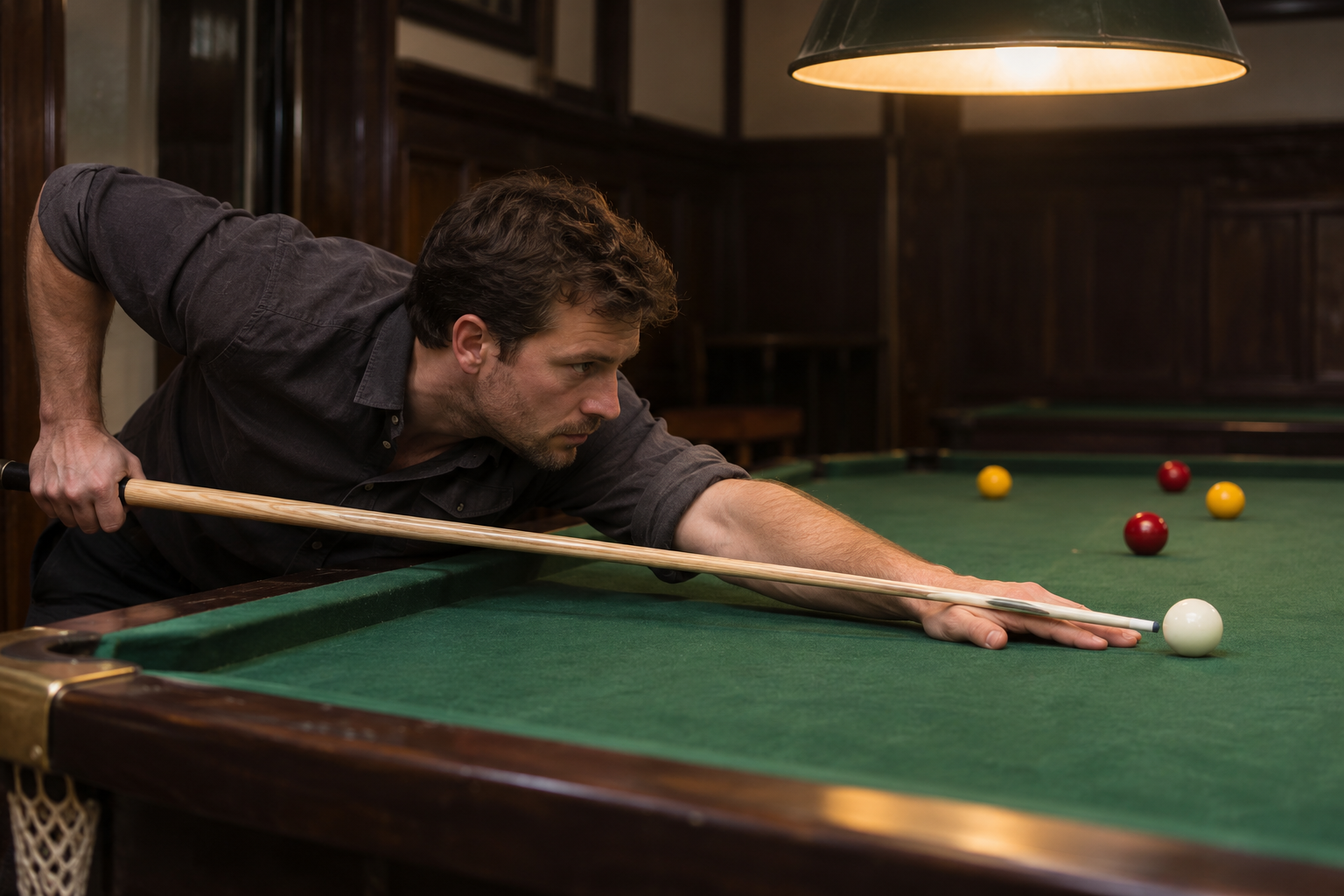
Players comparing peradon cues will find models made for specific games, including English eight-ball. That distinction helps narrow the search before weight, length or finish enters the picture. Before visiting a pool cue store, it helps to note which game the player plays most often, what feels comfortable about their current cue and whether they need to carry the new one between venues. Those details make it easier to compare cues that might look similar on the rack but feel quite different at the table.
Start with the game the cue is for
A player who spends most Friday nights on an English eight-ball table has a straightforward starting point. They can look for a cue designed for that game and use a familiar house cue as a reference. Someone who divides their time between pool and snooker may find it more useful to think through which game the purchase is meant to serve. For example, a player may already have access to a snooker cue at the club and want something specifically for regular pool practice at home.
Product descriptions often list the intended game, tip diameter and overall length. Those details help distinguish between models before a player tries them. They also help identify specialist equipment. An English eight-ball break cue, for instance, is designed for the opening shot, while a playing cue is the one a buyer would compare for ordinary shots throughout the frame.
Compare the feel on shots the player knows
Two cues can feel different in the hand even when their listed weights are close. A useful comparison starts with the same familiar shot played several times with each cue. A short straight pot gives the player a chance to notice whether the shaft moves comfortably through the bridge hand. A longer shot at an easy pace can reveal whether the player feels the need to tighten their grip or guide the cue through the stroke.
It’s worth trying a few shots at the same pace before deciding. A cue can feel good on a firm shot but feel less comfortable when the player is trying to send the cue ball only a short distance. A test that includes both types of shot tells the player more about how the cue might feel across a full frame.
For an online purchase, measuring a familiar cue and noting its weight, if available, gives the buyer something concrete to compare against the listing. It also helps to check whether the retailer lists a fixed weight or a range. If the exact weight matters, the buyer can ask about the cue currently in stock before ordering.
Allow for the room and the trip to the table
A cue that feels comfortable at a club table can be awkward to use in a tighter room at home. The useful check is to stand at the most restricted side of the table and try a normal backswing with the cue ball close to the cushion. A wall, bookcase or sofa can reduce the space available just where a player needs room to draw the cue back. If the restriction affects only one side, a shorter spare cue may be handy for those shots.
Transport raises a different question. A one-piece cue needs a case long enough to hold it at full length. A jointed cue comes apart for travel, and the length of its longest section determines which case will fit. That measurement matters for players who take public transport, share a lift to league night or store equipment in a small cupboard. Checking the case dimensions before buying can save a second shopping trip.
A cue that suits the game, feels comfortable through the stroke and fits the room can make regular practice easier at home or at the local club. For a first purchase, those checks give players a practical way to narrow the choice before comparing finishes and decorative details.